HOTSPOT SA PANEL. Loose connection agad? Hindi pa.
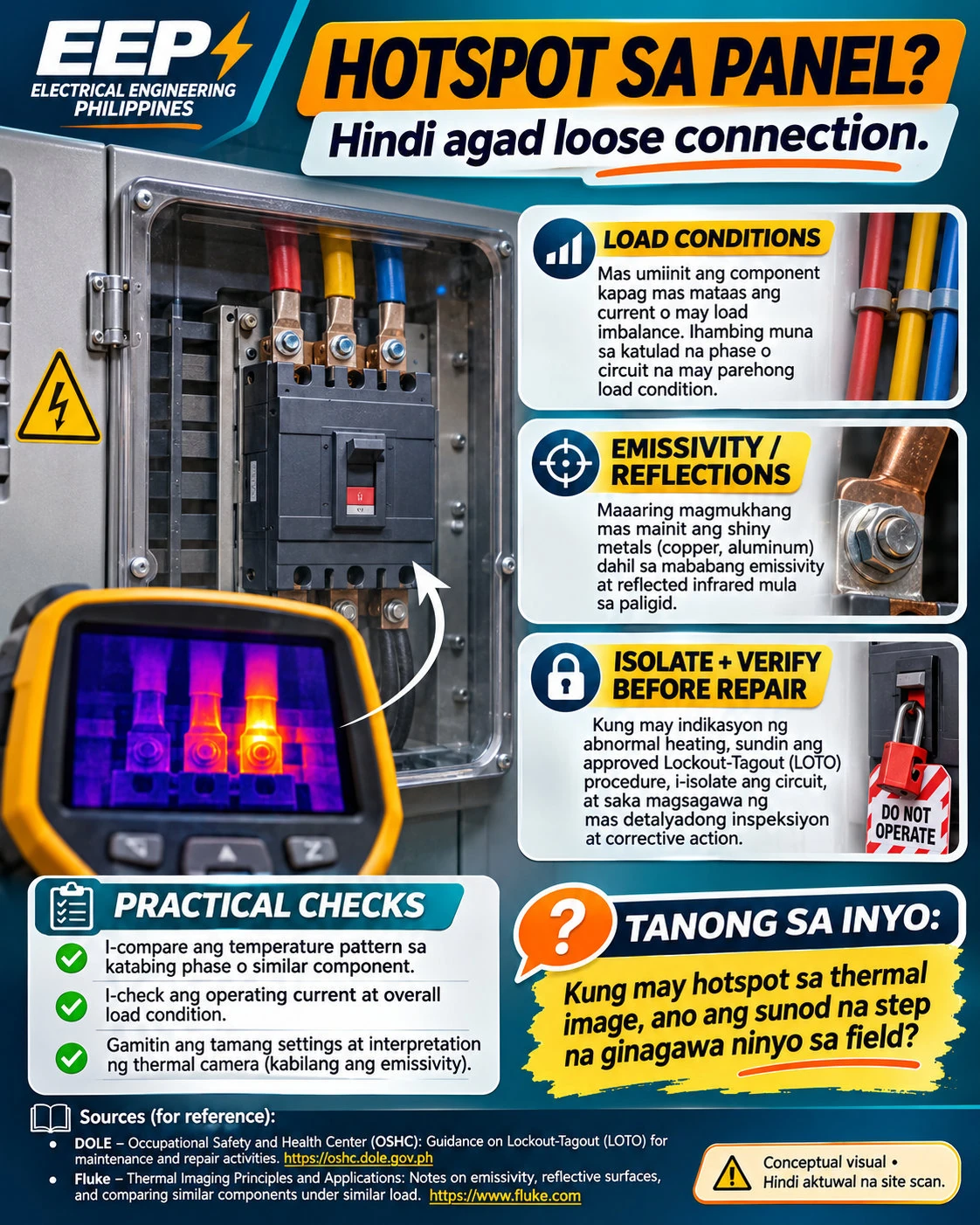
Kapag may isang terminal na mas mainit sa thermal image, mahalagang i-investigate. Pero hindi sapat ang kulay pula o isang temperature reading para sabihing maluwag agad ang connection.
Una, tingnan ang load. Ang mas mataas na current ay puwedeng magdulot ng mas mataas na heating. Ikumpara sa kahalintulad na component sa comparable operating at load conditions, at i-record ang actual loading kung ligtas at awtorisado ang measurement.
Pangalawa, ingatan ang basa sa shiny copper at aluminum. Mababa ang emissivity at puwedeng mag-reflect ng infrared energy, kaya minsan misleading ang apparent temperature. I-check ang thermal camera settings at measurement conditions. Hindi lahat ng hotspot ay loose connection.
Kapag may abnormal heating, i-report at i-assess ang risk bago ang corrective work. Huwag basta buksan ang energized enclosure o humawak ng terminal para lang makasiguro. Qualified at authorized personnel lang, ayon sa safe-work procedure ng facility. Para sa repair, sundin ang approved isolation/lockout-tagout, verify absence of voltage, at manufacturer instructions. Walang live retightening.
Sa thermal inspection report ninyo, ano ang unang tinitingnan para maiba ang totoong overheating sa reflection o high-load condition?
References:
Fluke — Hot Spot Detection: https://www.fluke.com/en-ca/learn/blog/thermal-imaging/hot-spot-detection
Fluke Philippines — Thermal Imaging Electrical Systems: https://www.fluke.com/en-ph/learn/blog/thermal-imaging/electrical-systems
DOLE-OSHC — Handle Electrical Appliances With Care (July 27, 2021): https://oshc.dole.gov.ph/handle-electrical-a/
DOLE-BWC — Strengthening Workplace Safety Through OSH Standards: https://bwc.dole.gov.ph/3475-2/
Conceptual infographic; hindi actual site scan/test, at walang implied code compliance.